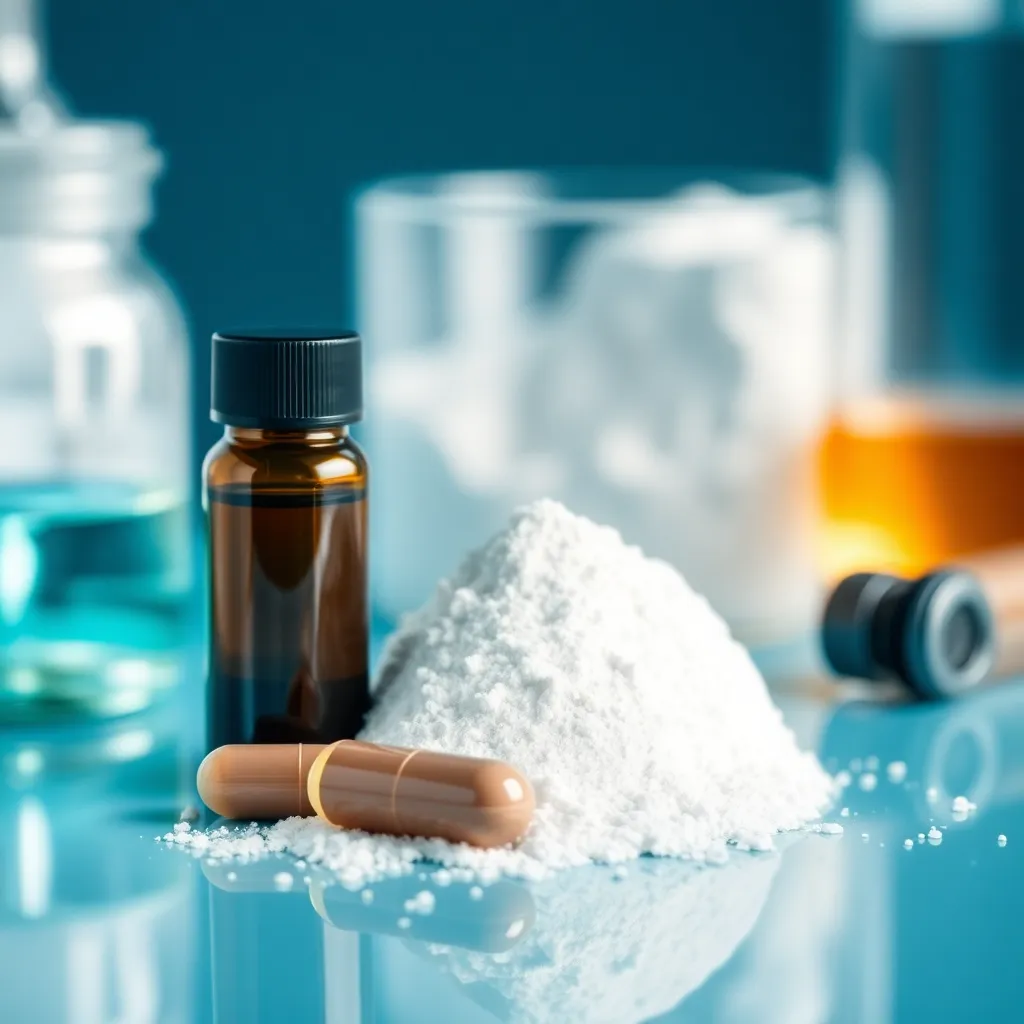
What is Rhodiola Rosea and How Does It Function as an Adaptogen?
Rhodiola rosea benefits center on its classification as a premier adaptogenic botanical, clinically shown to enhance the body's resistance to physical and mental stress while preserving cellular energy [3, 4]. When I analyze high performers facing chronic cognitive fatigue, I look past passive supplement trends and examine hard biochemical markers. Standardized extracts of this alpine root contain active phenylpropanoids—specifically rosavin, rosin, and rosarin—and phenylethanoid derivatives like salidroside and tyrosol [7]. These marker compounds act directly on the central nervous system to modulate monoamine levels and protect cellular adenosine triphosphate (ATP) production under high-demand operating conditions.
In our work with high-performing founders and agency operators at Nootropic.ai, we emphasize that true cognitive resilience requires more than just masking burnout with stimulants. It requires upgrading your internal operational system. That is why we built Nootropic.ai: to bridge the knowing-doing gap through precise, interactive execution infrastructure rather than passive shelf-help books. If you are ready to move beyond generalized wellness advice, you can Take the 2-Minute Peak Flow Assessment to uncover your specific cognitive friction points.
The Neurochemistry of Resilience: How Rhodiola Modulates the HPA Axis
To understand why this adaptogen belongs in a serious executive stack, we must examine its impact on the hypothalamic-pituitary-adrenal (HPA) axis. Clinical evaluations of cholinergic transmission and monoamine regulation indicate that standardized Rhodiola rosea preparations mildly inhibit catechol-O-methyltransferase (COMT) and monoamine oxidase (MAO) enzymes [8, 9]. This targeted inhibition prevents the rapid degradation of key neurotransmitters—specifically dopamine, norepinephrine, and serotonin—ensuring sustained focus during high-pressure sprints [7, 8].
Furthermore, randomized controlled trials published in journals such as Phytomedicine demonstrate that salidroside and rosavins help regulate stress-induced cortisol spikes and preserve neuropeptide Y (NPY) levels [1, 2]. When NPY is preserved under acute pressure, the brain resists the structural degradation associated with chronic burnout.
Within our Highest-Self Performance Psychology framework, maintaining this neurochemical stability is the foundation of State vs. Structure Mastery. You cannot anchor an elevated executive state if your internal biology is constantly whipsawed by cortisol and adrenal exhaustion. By integrating targeted botanical regulators, we stabilize the biological substrate so your executive identity can execute without friction.
Does Rhodiola Rosea Actually Work for Mental Fatigue and Burnout?
The empirical data supporting this botanical for mental fatigue is robust, though it requires precise interpretation. Multiple randomized controlled trials and open-label clinical evaluations—such as those utilizing standardized extracts like SHR-5 and WS® 1375—show statistically significant reductions in fatigue index scores and improvements in short-term mental performance during high-stress periods, including demanding examination phases and extended night-shift operations [1, 2, 5].
However, scientific rigor demands transparency. Systematic reviews note that while acute performance metrics improve, the broader clinical evidence base contains methodological variations, including small sample sizes and short intervention durations [3, 4]. Major health institutions, such as the U.S. National Center for Complementary and Integrative Health (NCCIH), emphasize that while subjective fatigue reduction is well-documented, individual responses vary based on baseline neurochemical profiles [6].
| Feature / Metric | Rhodiola Rosea (Standardized Extract) | Generic Ashwagandha Extract | Synthetic Central Nervous System Stimulants |
|---|---|---|---|
| Primary Mechanism | Monoamine preservation (MAO/COMT modulation) & HPA axis adaptation [8] | GABAergic signaling & cortisol reduction via withanolides | Direct dopamine/norepinephrine receptor agonism |
| Energy Profile | Clean, sustained alertness without jitter or overstimulation [7] | Calming, grounding, anti-anxiety resilience | Clean acute spike followed by significant neurochemical crash |
| Ideal Operational Use | High-demand executive deep-work sessions and burnout mitigation [1, 2] | Evening recovery, nervous system down-regulation, anxiety reduction | Emergency tactical focus for short-duration tasks |
| Tolerance Risk | Low when managed with strategic cycling protocols | Minimal | High, leading to escalating dosage requirements |
Acute Surge vs. Cumulative Adaptation: Timing for Peak Flow
One of the most common execution errors I see among driven operators is treating botanical adaptogens like over-the-counter pharmaceuticals—taking them haphazardly and expecting instant miracles. To leverage Rhodiola rosea for peak cognitive output, you must understand the distinction between an acute pre-task catalyst and a cumulative adaptogenic agent [7].
When executed through our Peak Flow Protocol, this compound serves a dual purpose:
- Acute Pre-Task Catalyst: Taken 30 to 45 minutes before a demanding cognitive block, a standardized dose provides a clean dopaminergic and noradrenergic lift, priming the brain for the "Struggle" phase of the 4-Phase Flow Architecture (context loading and challenge absorption) [7].
- Cumulative Adaptation: Taken consistently over 4 to 8 weeks, it builds systemic resilience against chronic stress, supporting the "Recovery" phase by preventing adrenal depletion and maintaining mitochondrial ATP output [1, 5, 7].
To maintain receptor sensitivity and prevent habituation, we advocate for structured cycling protocols—such as five days on followed by two days off, or alternating weeks. For precision dosage guidelines tailored to your specific operational schedule, Explore the Dosage & Safety Calculator.
The Quality Trap: Why Your Current Supplement Might Be Failing You
If you have experimented with this adaptogen in the past and felt nothing, the culprit is almost certainly the supplement supply chain. The commercial marketplace is flooded with whole-root powders and unstandardized extracts that lack the active phytochemical markers required to elicit a clinical response [11].
Published analyses of commercial botanical products reveal massive variability in active marker concentrations [11]. Clinical efficacy in human trials relies heavily on exact ratios—specifically a standardized 3:1 ratio of rosavins to salidroside (e.g., 3% rosavins and 1% salidroside) [7]. Anything less is botanical "fairy dusting." Furthermore, cheap formulations often suffer from poor extraction integrity, leaving heavy metal contaminants or inactive cellulose fillers [11].
Under The Responsible Enhancement Doctrine, we view nootropics and adaptogens as precision instruments for tuned systems. Using low-grade, unstandardized botanicals is the operational equivalent of putting low-octane fuel in a high-performance engine. You must demand third-party verified, HPLC-tested extracts to guarantee that the molecular payload matches the clinical science.
Safety, Side Effects, and Herb-Drug Interactions
While clinical trials confirm that standardized extracts are generally well-tolerated when used short-term, professional responsibility requires a clear mapping of safety boundaries and contraindications [7, 8, 9].
Reported adverse events are typically mild and transient, including dry mouth, mild gastrointestinal upset, headache, or occasional insomnia if taken too late in the afternoon [7, 9]. However, due to its monoamine-modulating and modest hypotensive properties, specific contraindications apply [8, 9, 10]:
- Psychiatric Vulnerability: Individuals with bipolar disorder or a history of manic episodes must exercise strict caution, as monoamine-preserving botanicals can occasionally trigger overstimulation or agitation [9, 10].
- Medication Interactions: Combined use with prescription antidepressants (such as SSRIs or MAOIs) carries a theoretical risk of additive central nervous system stimulation [8, 9, 10]. Similarly, individuals taking prescription antihypertensives or blood-thinning agents should consult a qualified clinician, as adaptogenic herbs can modulate blood pressure and platelet aggregation parameters [8, 9, 10].
- Pregnancy and Lactation: In the absence of rigorous safety data confirming fetal and neonatal safety, use during pregnancy and breastfeeding is contraindicated [9].
True cognitive mastery requires structural self-awareness. Elevating your operating system means respecting biological guardrails while ruthlessly eliminating friction between your ambitions and your daily output. You can also review our dedicated comparison on Rhodiolife Rhodiola vs KSM-66 Ashwagandha for shift workers to understand how different botanical classes serve specific operational environments.
FAQ
Can I stack Rhodiola Rosea with caffeine?
Yes, you can safely stack standardized Rhodiola rosea with caffeine to enhance focus, provided you monitor your total central nervous system load. Because Rhodiola mildly inhibits MAO and COMT enzymes while caffeine acts as an adenosine receptor antagonist, combining them produces a synergistic, clean alertness [7, 8]. However, hyper-reactive operators should moderate dosages to avoid jitteriness or overstimulation [7]. You can check your combined stimulant profile using the Caffeine Theanine Calculator.
How quickly does Rhodiola Rosea take effect?
Rhodiola rosea delivers a noticeable acute dopaminergic and noradrenergic lift within 30 to 45 minutes of ingestion, making it an effective pre-task catalyst [7]. However, true adaptogenic systemic resilience and robust HPA-axis regulation require cumulative daily dosing over a period of 2 to 4 weeks to optimize cellular ATP production and neuropeptide Y stability [1, 5, 7].
Is Rhodiola suitable for people with high anxiety?
Rhodiola rosea is generally activating and may not suit individuals presenting with a "wired and tired" or hyper-anxious neurochemical profile [7, 9]. Because its primary mechanism involves preserving excitatory monoamines like dopamine and norepinephrine, highly anxious or over-stimulated operators often achieve better neurological balance by utilizing calming, GABAergic adaptogens like Ashwagandha instead [7].
Should Rhodiola Rosea be cycled?
You should cycle Rhodiola rosea to maintain long-term receptor sensitivity and prevent biological habituation [7]. Implementing a structured protocol—such as taking the supplement for five consecutive days followed by a two-day weekend washout, or alternating weeks—ensures your biological substrate remains responsive to its monoamine-preserving mechanisms [7, 8].
References
- PubMed - Rhodiola rosea in stress induced fatigue (SHR-5 trial)
- PubMed - Phase III clinical trial of SHR-5 extract on stress-related fatigue
- PubMed - Effectiveness of Rhodiola rosea L. Preparations (2022 Review)
- PubMed - Systematic Review on Physical and Mental Fatigue (Ishaque et al., 2012)
- PubMed - Open-label trial of Rhodiola rosea (WS® 1375) in chronic fatigue
- NIH NCCIH - Rhodiola: Usefulness and Safety Overview
- Examine.com - Rhodiola Rosea Evidence, Safety, and Side Effects Analysis
- Medical Science of Ukraine - Systematic Review of Efficacy, Safety, and Herb-Drug Interactions
- Memorial Sloan Kettering Cancer Center - Rhodiola Professional Summary
- Merck Manual Professional Edition - Dietary Supplement Interactions and Rhodiola Profile
- PMC - Quality and Safety Analysis of Rhodiola rosea Supplements on the U.S. Market
- Government of Canada - Decision on Rhodiola rosea Root Extract as a Supplemental Food Ingredient
- Health Canada - Natural Health Product Database Monograph and Approved Uses for Rhodiola